Aesthetic surgery
Rhinoplasty
One of the most technically demanding operations in aesthetic surgery — and one where the final result takes a year or more to appear.
What this treatment involves
Rhinoplasty reshapes the bone and cartilage that give the nose its form. It can reduce or refine a bridge, alter the tip, narrow the nostrils, correct asymmetry, or straighten a nose after injury.
It is often combined with septoplasty — straightening the partition inside the nose — where breathing is obstructed. Appearance and airway are not separate problems: changing the external shape alters the internal airflow, which is why a surgeon assesses breathing even when a patient has come purely for appearance.
Open rhinoplasty uses a small incision across the columella, the strip of skin between the nostrils, giving direct visibility. Closed rhinoplasty works entirely through the nostrils, leaving no external scar but with less exposure. Which is used depends on what needs changing, not on which sounds better.
Who may be suitable
Considered for people who are unhappy with the shape of their nose, whose breathing is obstructed, or who have suffered injury.
Surgeons generally wait until facial growth is complete — around sixteen for girls and slightly later for boys. Active smoking impairs healing significantly and is usually required to stop well before and after surgery.
The most important factor is not what you want but what your anatomy permits. Thick skin limits how much refinement is visible; weak cartilage limits how much structure can be reduced without collapse later. A surgeon who agrees to everything requested without discussing these constraints is not planning carefully.
Body dysmorphic disorder is a specific contraindication, and a responsible surgeon will decline to operate where expectations cannot be met by surgery.
Why patients choose it
Where breathing is obstructed, correcting the septum and internal valve can produce a genuine functional improvement — better sleep, better exercise tolerance, less reliance on decongestants.
Aesthetically, changes to proportion and profile are permanent in a way that no non-surgical treatment achieves. Filler can camouflage a small irregularity; it cannot reduce a bridge or narrow a tip.
How treatment works

Consultation and examination
Day 1
Both the external shape and the internal airway are examined. Skin thickness and cartilage strength are assessed, since they set the limits of what is achievable.
Planning and discussion
Day 1–2
Goals discussed with photographs and, where useful, simulation — explicitly as a communication tool, not a promise.
Pre-operative tests
Day 2
Blood tests, ECG and anaesthetic review as indicated.
Surgery
Day 3
Performed under general anaesthetic, usually taking two to four hours depending on complexity and whether the septum is corrected.
Splint removal and review
Day 7–9
The splint is removed around day seven, with review by the surgical team before you are cleared to fly.
Settling
12–18 months
Swelling resolves gradually over twelve to eighteen months, the tip last. Remote follow-up continues throughout.
What happens in Istanbul
Aesthetic surgery requires a stay of seven to ten days. Consultation, examination and pre-operative tests happen over the first day or two, followed by the procedure and one or two nights in hospital. You then remain in Istanbul for review, and for removal of any splint, sutures or drains before flying. Departure is confirmed by the surgical team rather than by your booking — flying too soon after surgery carries a raised risk of blood clots and swelling.
Recovery
A splint is worn for about a week. Bruising around the eyes is normal and usually fades within two weeks, though it varies considerably between people.
Breathing through the nose is obstructed for one to two weeks by internal swelling — expected, and not a sign the surgery failed. No glasses resting on the bridge, no strenuous exercise, and no risk of impact to the nose for at least six weeks.
Most people are presentable in public at two weeks and back to normal activity at four to six. The result is not finished then. Swelling resolves over twelve to eighteen months, and the tip is always last — it is the thickest tissue and the slowest to settle. Judging the outcome, or seeking revision, before a year has passed is judging something that has not finished happening.
Typical recovery
A splint is worn.
Breathing through the nose is obstructed by internal swelling. Expected, and not a sign the surgery failed.
Bruising around the eyes usually fades, though it varies considerably between people. Most are presentable in public.
No glasses resting on the bridge, no strenuous exercise, and no risk of impact to the nose.
Swelling resolves over twelve to eighteen months and the tip is always last. Judging the outcome before a year has passed is judging something that has not finished happening.
A usual course, not a schedule you have been given. Recovery varies considerably between people, and the full recovery information above is what your own plan is based on.
Risks and considerations
General anaesthetic carries its own risks. Specific to rhinoplasty: bleeding, infection, and a persistent change in the sense of smell.
Breathing can be made worse rather than better. Over-reduction of structure weakens the nose and can cause collapse of the airway months or years afterwards — a problem that is difficult to correct and often requires cartilage grafted from the ear or rib.
Asymmetry, irregularity of the bridge, or a tip that settles differently from either side are all possible, and the revision rate after rhinoplasty is meaningfully higher than after most aesthetic procedures. Revision surgery is harder than the first operation, because scar tissue and altered anatomy make it less predictable.
Numbness of the tip is common early and usually improves over months. An open approach leaves a small scar on the columella which normally fades but does not disappear. Thick skin may not drape as tightly as hoped regardless of what is done underneath.
No surgeon can guarantee a specific appearance. Simulations show a goal, not a prediction.
This information is general and educational. Whether a procedure is appropriate for you can only be determined by a qualified medical professional after an individual assessment, including your medical history and an examination.
Common questions
When is the result final?
Twelve to eighteen months, and the tip is last. You will look presentable at two weeks and normal to most people at three months, but swelling continues to resolve for a year or more. Judging the outcome — or asking about revision — before then means judging something that has not finished settling.
Is a simulated image what I will get?
No. Simulations are for discussing goals — useful for making sure surgeon and patient mean the same thing. They cannot account for how your skin drapes, how your cartilage behaves or how you scar. Any clinic presenting a simulation as the expected result is promising something anatomy may not permit.
Further reading
Open and closed rhinoplasty: what the difference actually means
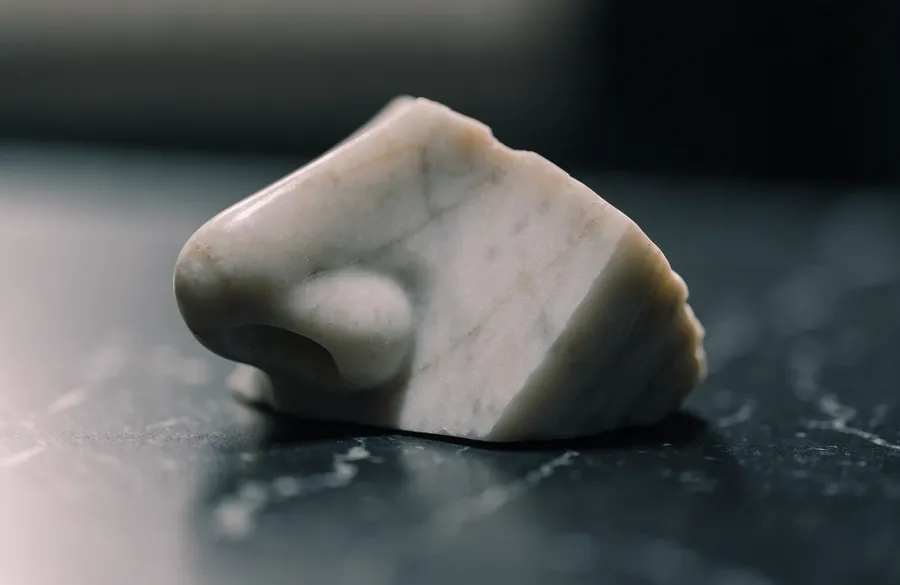
One approach adds a small incision across the columella and lifts the skin for direct vision. The other works entirely from inside. Here is what each buys, and what it costs.
Intimate surgery: the questions to ask first
Labiaplasty, vaginoplasty and penile enhancement are three different operations with one thing in common: the most important conversation happens before anyone discusses technique.
Abdominal etching: who it suits, and who it does not
It sculpts shadows over muscle that is already there. It does not build muscle, and on the wrong patient — or after later weight gain — the lines can look drawn on.


Let's plan your treatment
Send us your details and a treatment coordinator will guide you through the next step.